I’m not racist
“There’s no cupcakes here! Ugh. Uh oh. This is about racism. What? I would really prefer a cupcake.”
Don’t leave the website yet! I am not here to make you feel bad. I too have had my fair share of racial faux pas in my life. Stick with me, my little fellow white friend. I believe in you <3
Have you ever found yourself saying one of these things:
- “I’m not racist”
- “I have a Black friend who says racism isn’t a problem”
- “I don’t see color”
- “If we stop talking about racism, it would be solved”
- “My life has been hard — I don’t see how I have any white privilege”
- “White people were slaves too” (indentured servitude)
- “Racism is illegal now, so it’s over”
- “Affirmative action / diversity programs are reverse racism” {#affirmative-action}
- “I didn’t own slaves — my ancestors weren’t even here yet”
- “That was all so long ago — why can’t people just get over it?”
Hey fellow whitey. I hear you. You’ve seen the outline and you’re getting anxious now.
I want you to know:
You’re not a bad person if you’ve said these things
But you might be a bad person for other crimes. I have no idea. I don’t know you.

If a house is on fire, you can stand in front of it and say “I don’t think that’s fire.” The house burns the same either way. Denial doesn’t change what’s true — it only changes whether you can do something about it.
Am I denying the smoke so I don’t have to see the fire? Denial costs you nothing in the moment. But denial is not neutral. Denial is a missed chance to understand something already shaping your neighborhood, your loan, your kids’ school, someone else’s lived experience.
The fire doesn’t wait for you to agree it’s real.
Many people have said these things, because many people feel this way. Think of what follows not as an argument to win, but a window to look through.
“I’m not racist”
Why it sounds true: For most people, this is true at the level of personal intent. They are saying “I’m not a bad person”.
What actually holds up:
We don’t know your heart — we’ll assume it’s good. But this isn’t about that. And agreed, structures that predate your birth aren’t your fault. But this is about whether systems larger than you still produce unequal outcomes regardless of your intent.
The system we live in was built by many people before us and many current people who aren’t us. A lot of those people have varying levels of harmful internalized racist ideas that predate us and persist (the author of this included! I have held racist ideas in my lifetime and I am still learning new things every day an).

Why? Ask yourself why you don’t want to believe that America has a problem of racism?
Most white folks I know are not actively wishing ill or actively trying to harm on Black folks. Most white folks I know are well-intentioned people who might be actively doing good things for their communities.
But the majority of us white folks also do not want to admit that it is harder to live in America as a Black person than a white person.
Why? Is racism something we are resistant to admitting? Can we use our thinking caps on this one?
Admitting other people have struggles does not negate the struggles you’ve had as a white person.
Some white folks have been through the ringer. Acknowledging racism does not invalidate their hard lives.
A real picture of people discussing racism:
Oh no, data. I didn’t know there would be math too.
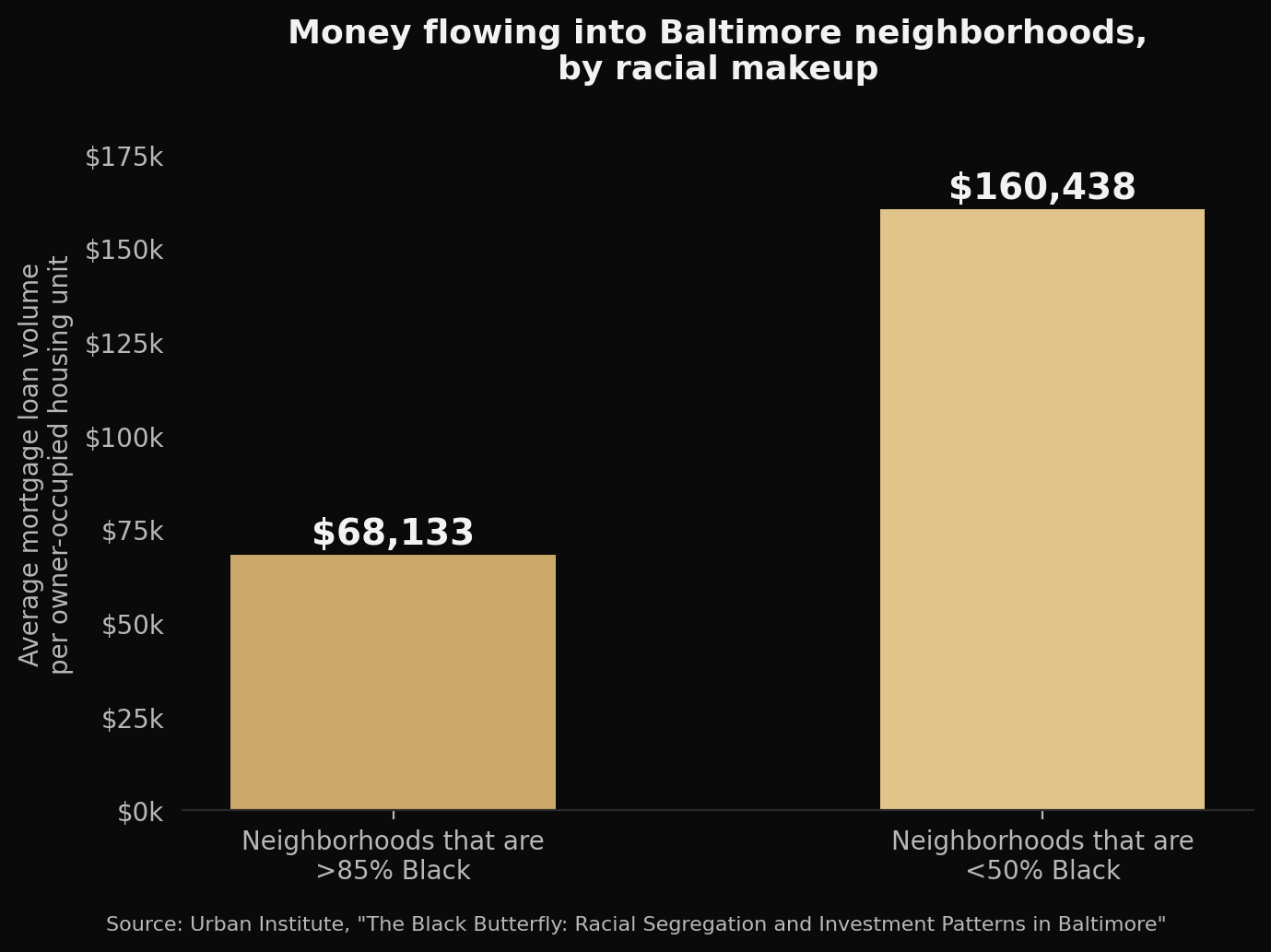
Baltimore neighborhoods over 85% Black received less than half the mortgage investment per unit that neighborhoods under 50% Black did — over $92,000 less per unit. No single loan officer decided that; it’s the aggregate of thousands of decisions. That’s what “systemic” means.
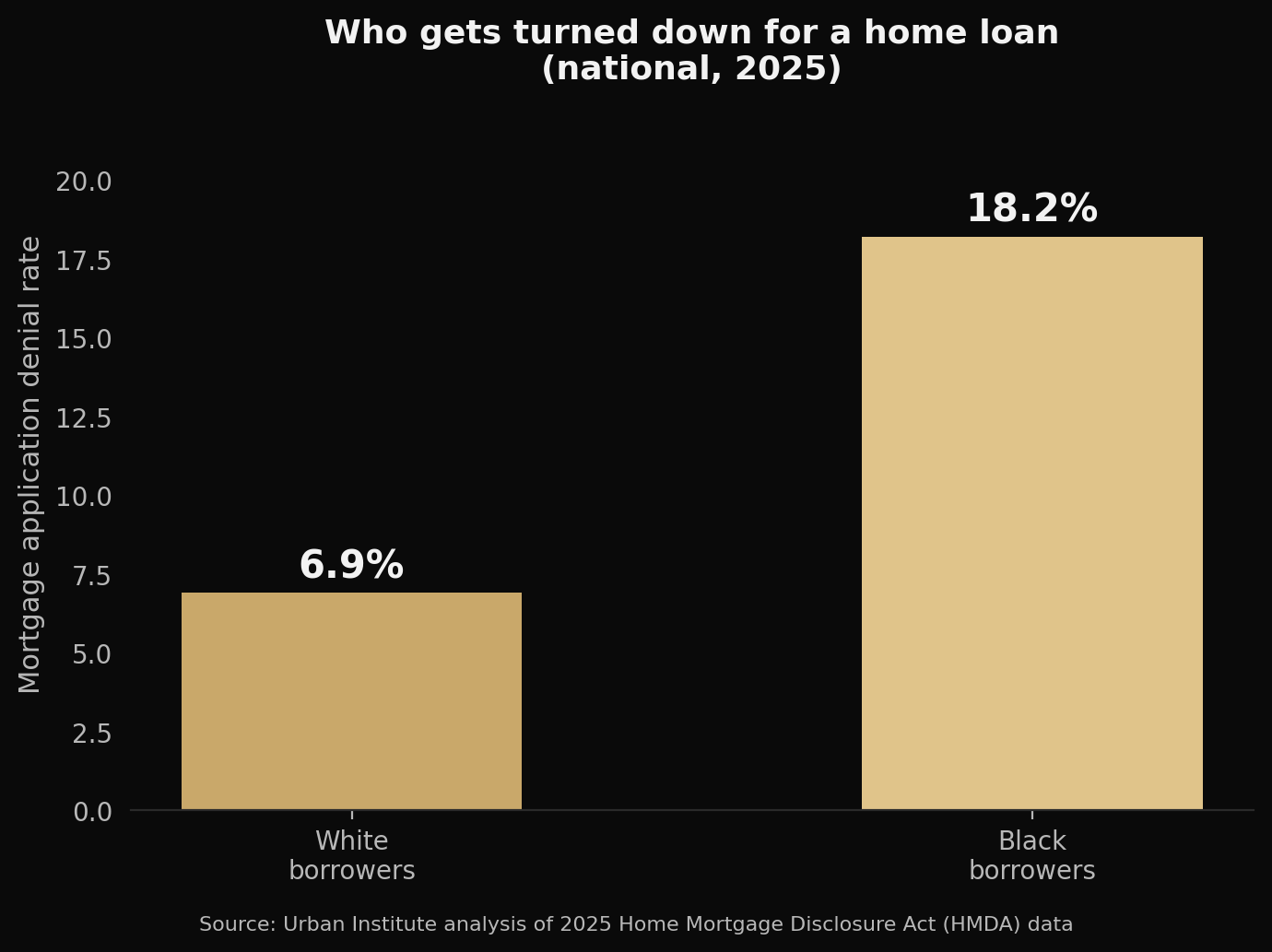
Nationally in 2025, Black applicants were denied at 18.2%, more than double the white rate of 6.9%. Credit scores and income differ across groups — fair objection. But research holding credit score constant still finds Black applicants denied 50–120% more often. Hold the “reasonable explanation” fixed and the gap doesn’t close.
If you read this far — are you feeling angry? Defensive? Are you in the shower coming up with a scathing argument in return?
Why? Take a breath with me. Why do these data get emotions in you? What do you think this data is saying about you? Can you detach yourself for a minute? Unless you personally denied every Black person their mortgage loans, I don’t blame you specifically.
“I have a Black friend who says racism isn’t a problem”
Why it sounds true: If someone directly affected says it isn’t happening, that feels like it should settle the question. Black person says “I’m fine”. Great we can move on. We all know no one has said “I’m fine” without meaning it before. :)
What actually holds up: Shoot. Anecdotal evidence isn’t gonna dig us out this time. One person’s experience doesn’t substitute for a whole population of Black people’s data. The same way one person surviving a crash without a seatbelt doesn’t mean seatbelts don’t matter.
Black Americans aren’t a monolith; views vary widely, as Pew Research’s ongoing surveys show. But the data — denial rates, sentencing disparities, wealth gaps — doesn’t move depending on any one person’s opinion. A friend’s experience and a national dataset are answering different questions.
Ask yourself your Black friend’s motivations for not wanting to talk about racism with you? Perhaps they want to keep things smooth between you and them? I do not know your friend, but I can think of a lot of reasons they might not want to admit or talk about racism.
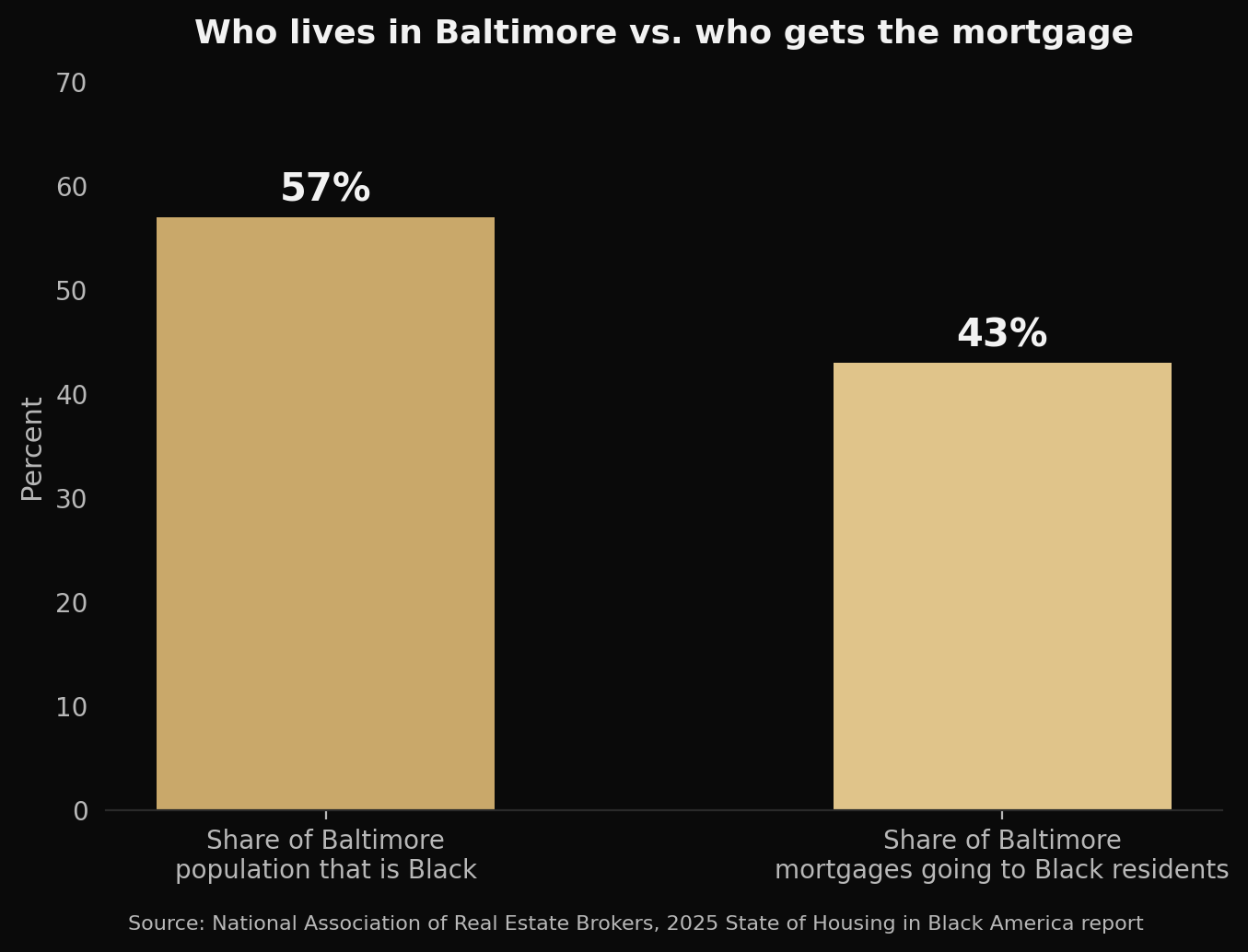
How to read this: Black residents are 57% of Baltimore’s population. If mortgages had no relationship to race, you’d expect close to 57% to go to Black residents. It’s 43% instead — a 14-point gap that holds regardless of any individual’s opinion about it.
“I don’t see color”
Why it sounds true: Usually said in good faith — “I treat everyone the same.”
What actually holds up: Good intent, but if the systems around us — lending, policing, school funding — still sort people by race, not seeing color doesn’t stop the sorting. It just stops you from seeing it. A doctor who ignores blood type isn’t being fair — they’re missing what they need to treat you well.
Why might the systems benefit from having more people incarcerated?
The average prison laborer is paid ~$0.63/hour, ranging from $0.00 to about $2.00/hour depending on the state.
Some folks in prison are laboring for free. That sounds like something we supposedly abolished with the 13th amendment except we put a sneaky clause in there: “except as a punishment for a crime”.
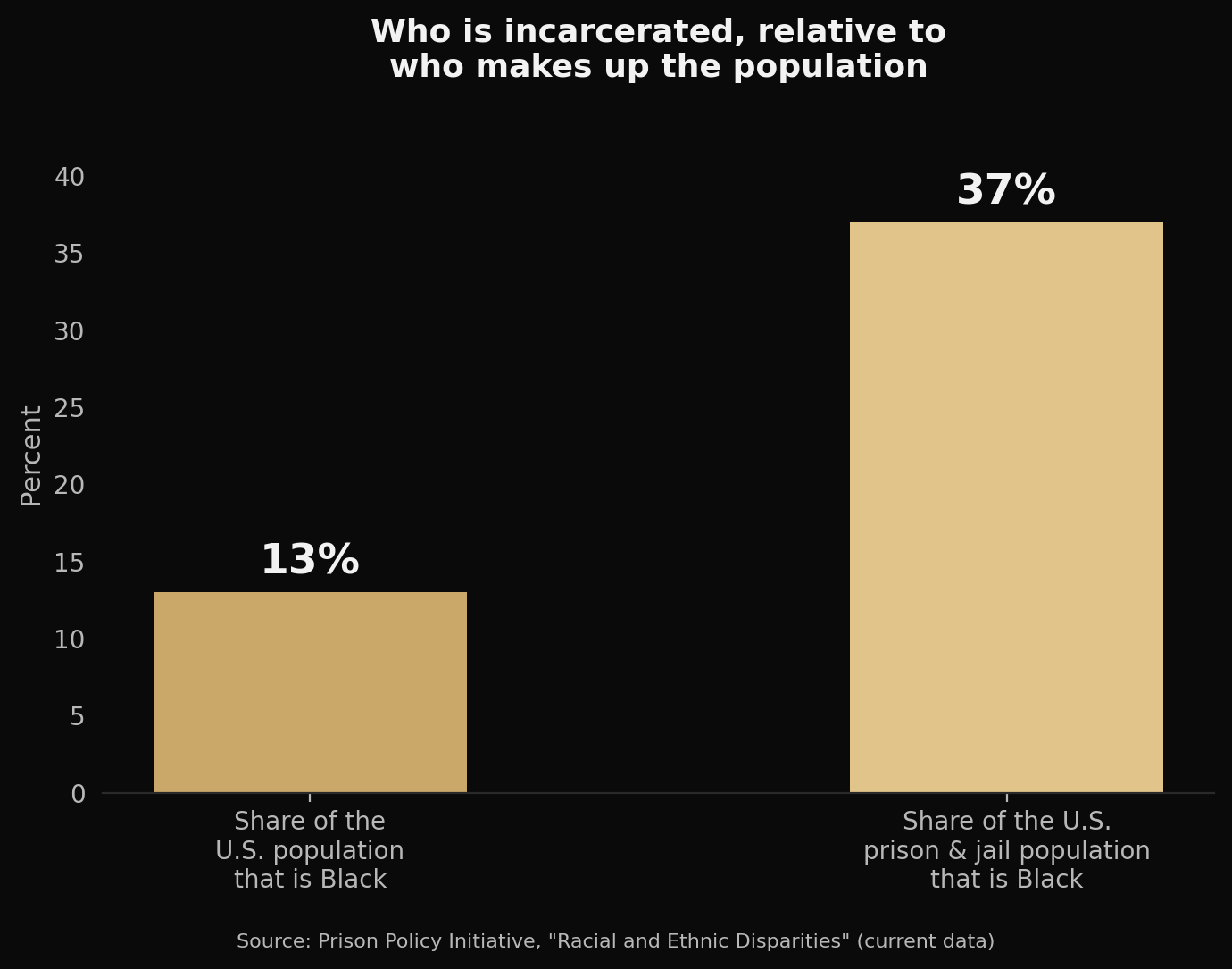
Black Americans are 13% of the U.S. population but 37% of the incarcerated population.
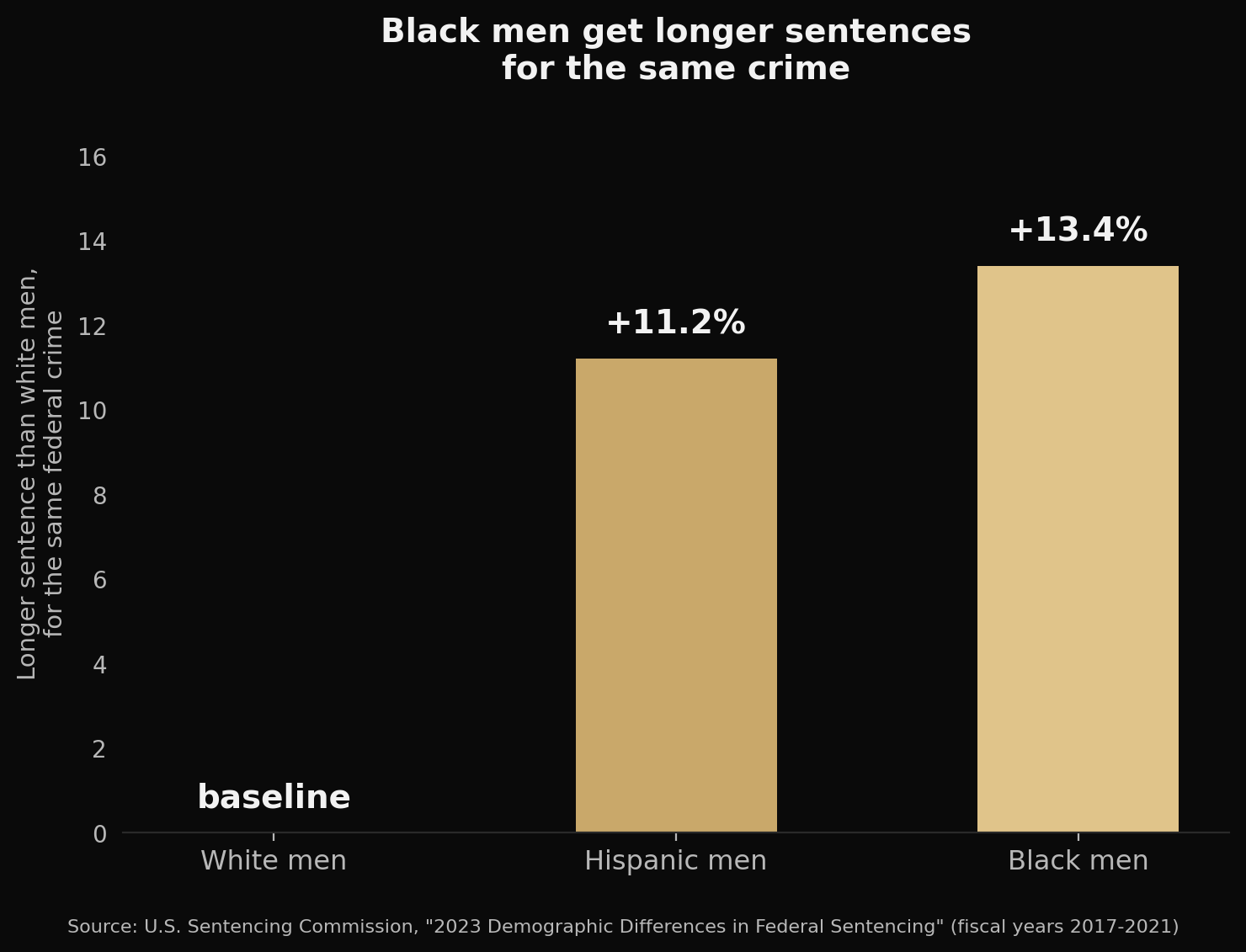
Black men get sentences 13.4% longer than white men for the same crime, even after controlling for criminal history — a gap that starts even earlier.
Not only are Black american convicted more, and for longer sentences, we more often figure out they were wrongfully accused than anyone else.
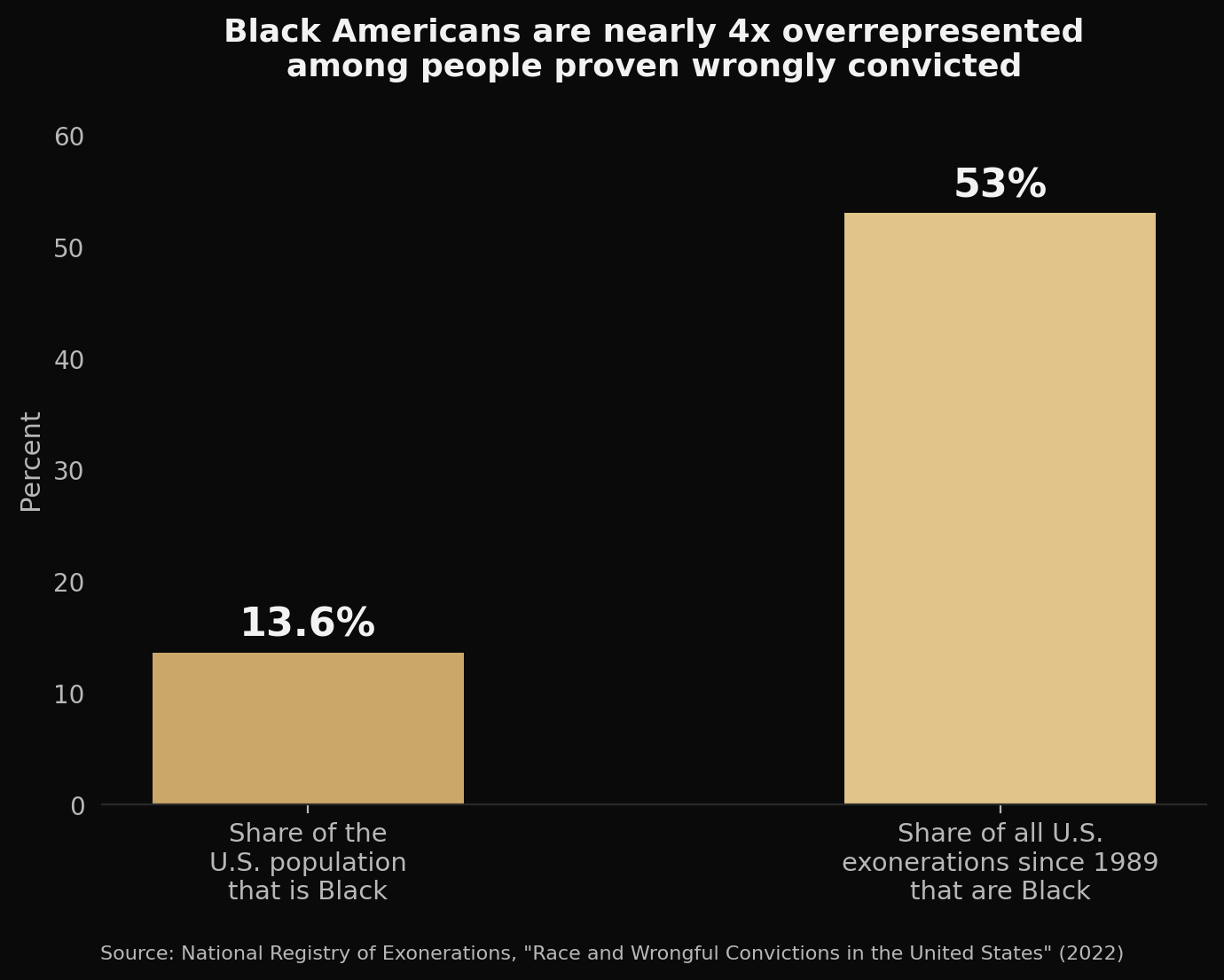
Many folks plead guilty just because they don’t have money to defend themselves well, and the spread thin court appointed lawyer will encourage them to do so because they just don’t have time. Black Americans are 13.6% of the U.S. population. Since 1989, they’ve made up 53% of everyone in the country later proven innocent and released.
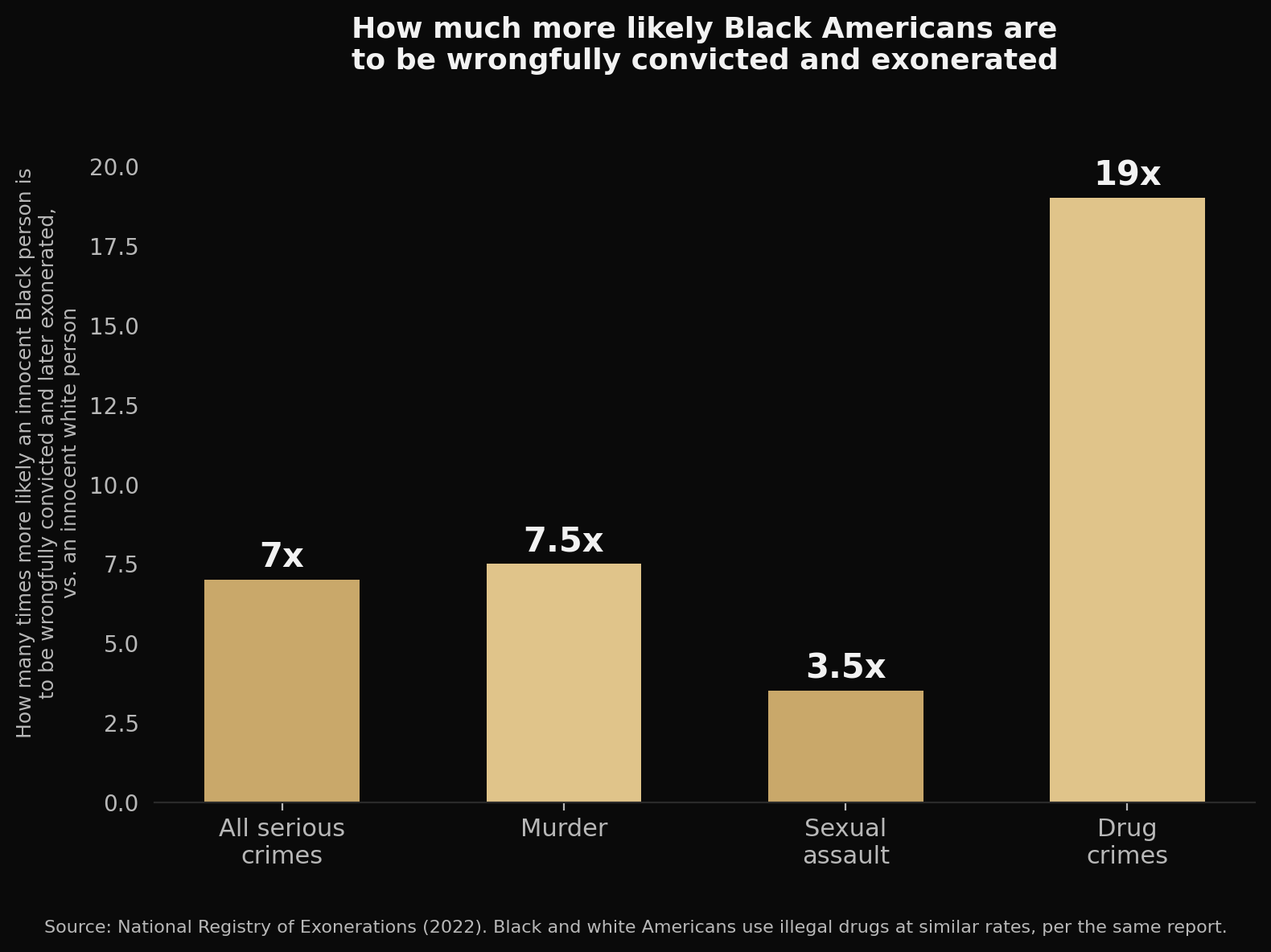
Break it down by crime type and the gap moves — but it never disappears. For drug crimes specifically, innocent Black people are 19 times more likely to be wrongfully convicted than innocent white people, even though Black and white Americans use illegal drugs at similar rates. That’s not a gap explained by different behavior. It’s a gap explained by who gets targeted, searched, and disbelieved.
Black murder exonerees spent an average of 16 years wrongly imprisoned before release — three years longer than white exonerees proven innocent of the same crime. Think of what you’ve done over three years. That’s not insignificant. That’s time stolen.
Video and sources for this section ↓
“If we stop talking about racism, it would be solved”
Why it sounds true: Constant conflict does seem to keep old wounds open.
What actually holds up: History runs the other way. Redlining ended not through silence, but through the Fair Housing Act of 1968 — after decades of more organizing and documentation, not less. A gap built by a 1937 map doesn’t close because nobody mentions the map.
In a well-known 2005 60 Minutes interview, Morgan Freeman said that the best way to end racism is to stop talking about it, and that he didn’t want a Black History Month because “Black history is American history.” Freeman was arguing against categorizing people day to day, not discussing the damage that systems have done and continued to do. Systems don’t change if we stop talking about them.
Also do you remember what we said about if your Black friend says racism doesn’t exist it doesn’t make it so? Even if your friend is Morgan Freeman, it doesn’t make it so.
Video and sources for this section ↓

“My life has been hard — I don’t see how I have any white privilege”
Why it sounds true: “Privilege” can sound like it means an easy life, and if yours involved real hardship, that word can feel like it’s erasing something true.
What actually holds up: White privilege never meant an easy life — it means race hasn’t been one more thing stacked on top of everything else. Two people can face the same broken-down car and low wages, and one of them is also more likely denied the loan to fix it, or pulled over for the same behavior. Two people can both be drowning; one can still have a weight tied to their ankle the other doesn’t.
White people have also had sucky lives sometimes. But the suckiness was not due to race.
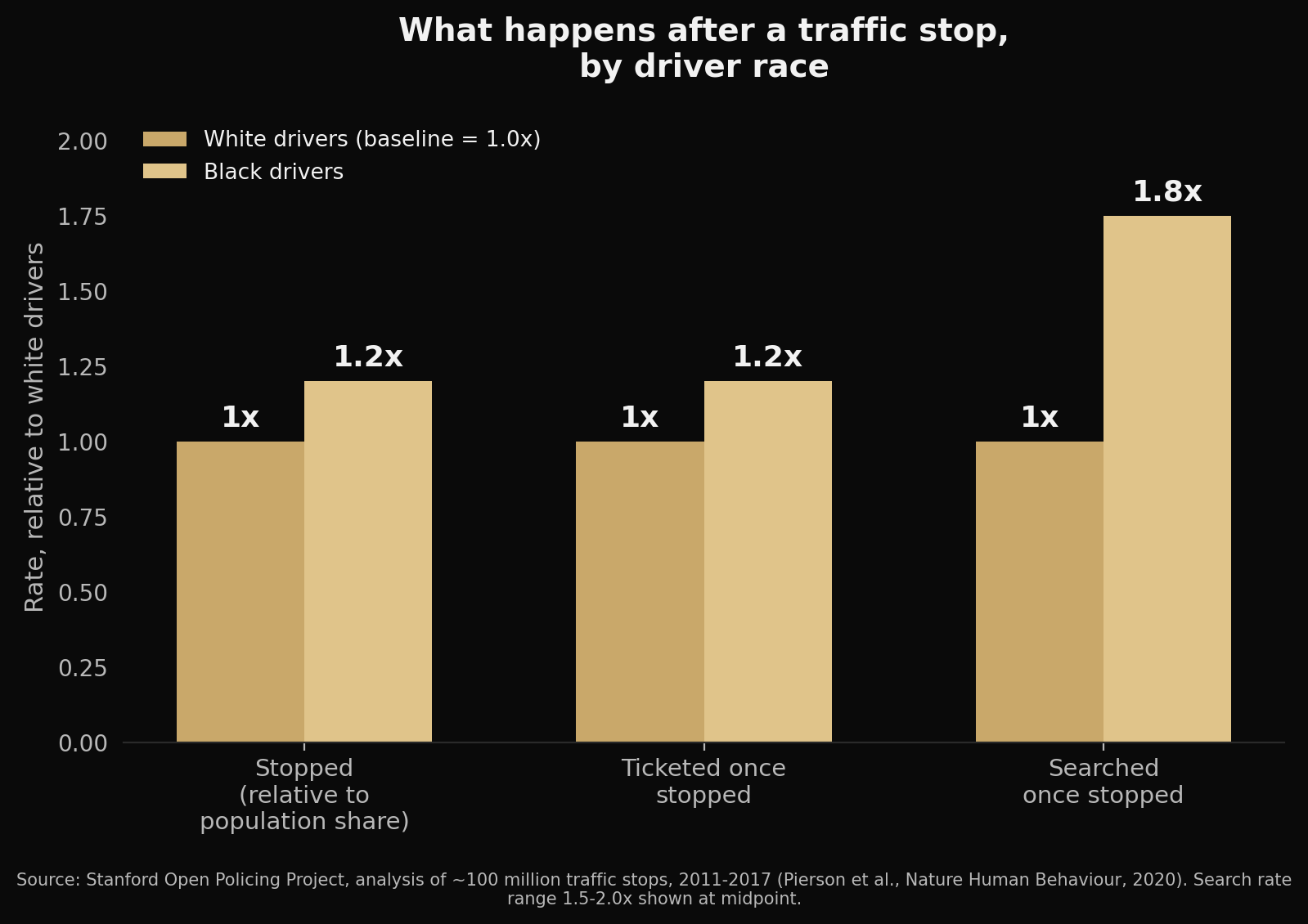
Two people can be pulled over for a traffic violation but the probability of the outcomes vary by race.
Video and sources for this section ↓
“White people were slaves too” (indentured servitude)
Why it sounds true: Indentured servitude was real and brutal for poor white Europeans in colonial America.
What actually holds up: True. Bad things have also happened to white people in history.
White European slavery or indentured servitude was often different. It often had a contract and an end date. No doubt, white slaves also suffered, but for the most part, when the suffering was done, it was done. We no longer think lesser of Irish people for example (even if I don’t care for Ed Sheeran’s music).
True, slavery was not invented by America. We were just particularly evil at it. We not only enslaved people but dehumanized them and rationalized it by saying we White people were of a higher order. We said that Black folks were better off underneath our control. And even when Black folks got free from slavery, these beliefs persisted – still in pockets and places deep in our subconscious today.
So correct, white people have been slaved. But to compare the two feels very invalidating to the historical suffering of Black Americans.
History nerd note: Bacon’s Rebellion (1676) — where white and Black servants revolted together — is the moment historians point to when elites hardened race-based permanent slavery specifically, granting poor whites new privileges to prevent future alliances. One system was reformed; the other required a war and a constitutional amendment.

“Racism is illegal now, so it’s over”
Why it sounds true: The Civil Rights Act (1964) and Fair Housing Act (1968) were real, hard-won victories.
What actually holds up: A law banning something going forward doesn’t erase what it already built. The 1937 HOLC map is illegal to draw today — and neighborhoods it graded “hazardous” still show lower home values and life expectancy eighty-plus years later. Illegal stops new instances; it doesn’t resolve what already happened.
Whereas many white families built economic safety nets over each generation, Black families were severely blocked from accruing wealth.
This does not mean every white family is Scrooge McDuck, rolling in money. It just means that there are very few Black Scrooge McDucks because the aspiring Black Scrooge McDucks didn’t have seed money to fuel their ventures or to use for a home payment, or to send them to school.
“Affirmative action / diversity programs are reverse racism”
Why it sounds true: A policy that explicitly considers race can look like the same sorting this site criticizes elsewhere — a fair thing to notice.
What actually holds up: IF the rest of society were fixed (heavy on the IF), affirmative action would indeed be a problem. Affirmative action is a bit of a band-aid on an open wound. In a world where inherited wealth, access to education, and societal attitudes towards skin colors were all equal among people groups, these programs would be problematic. But these programs responded to measurable, documented exclusion, and did not occur in a vacuum. That the disparity these programs are responding to is real is a separate, more settled question.
That being said, data shows that affirmative action does not lead to people being in positions they are not qualified for.
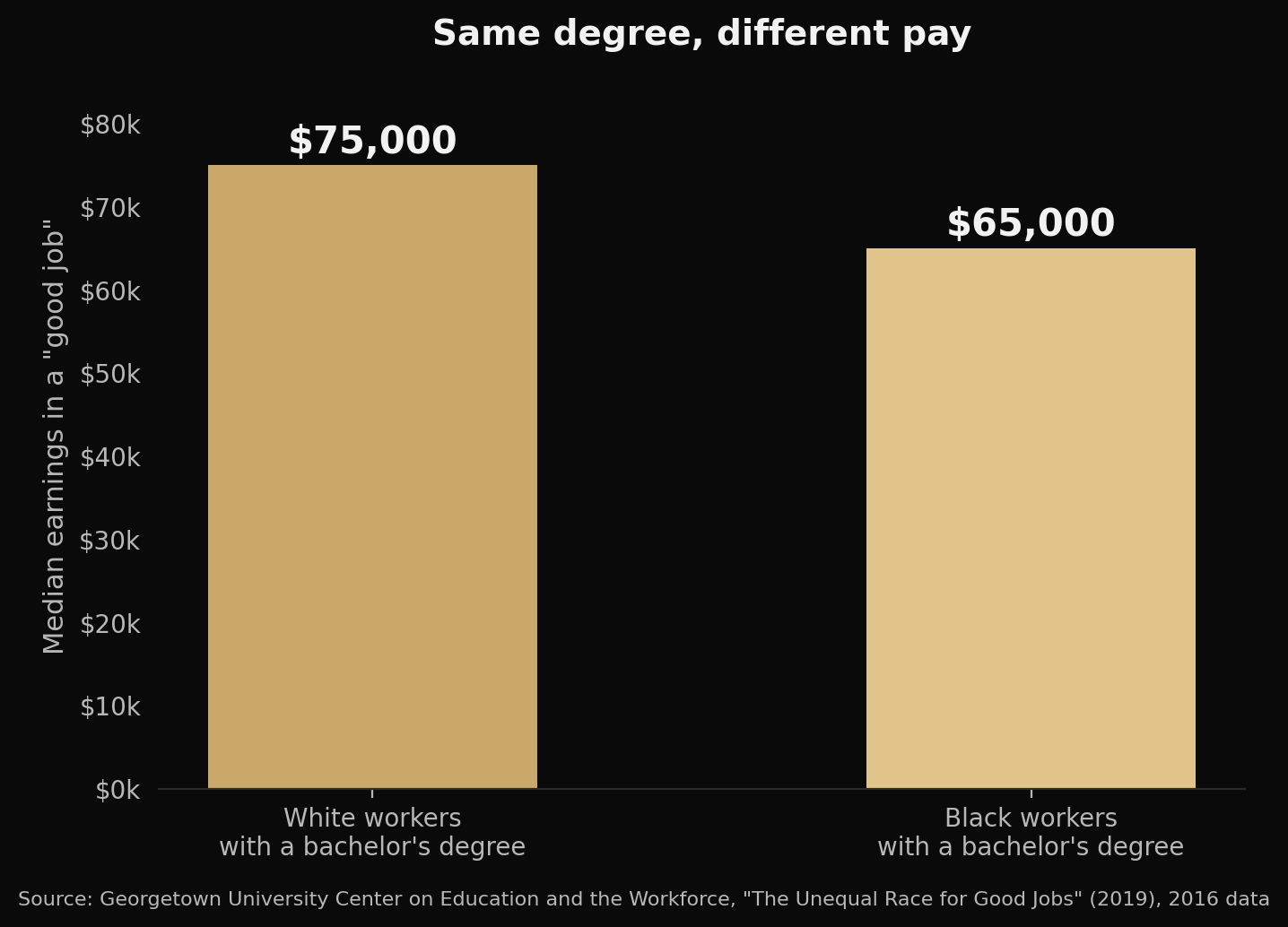
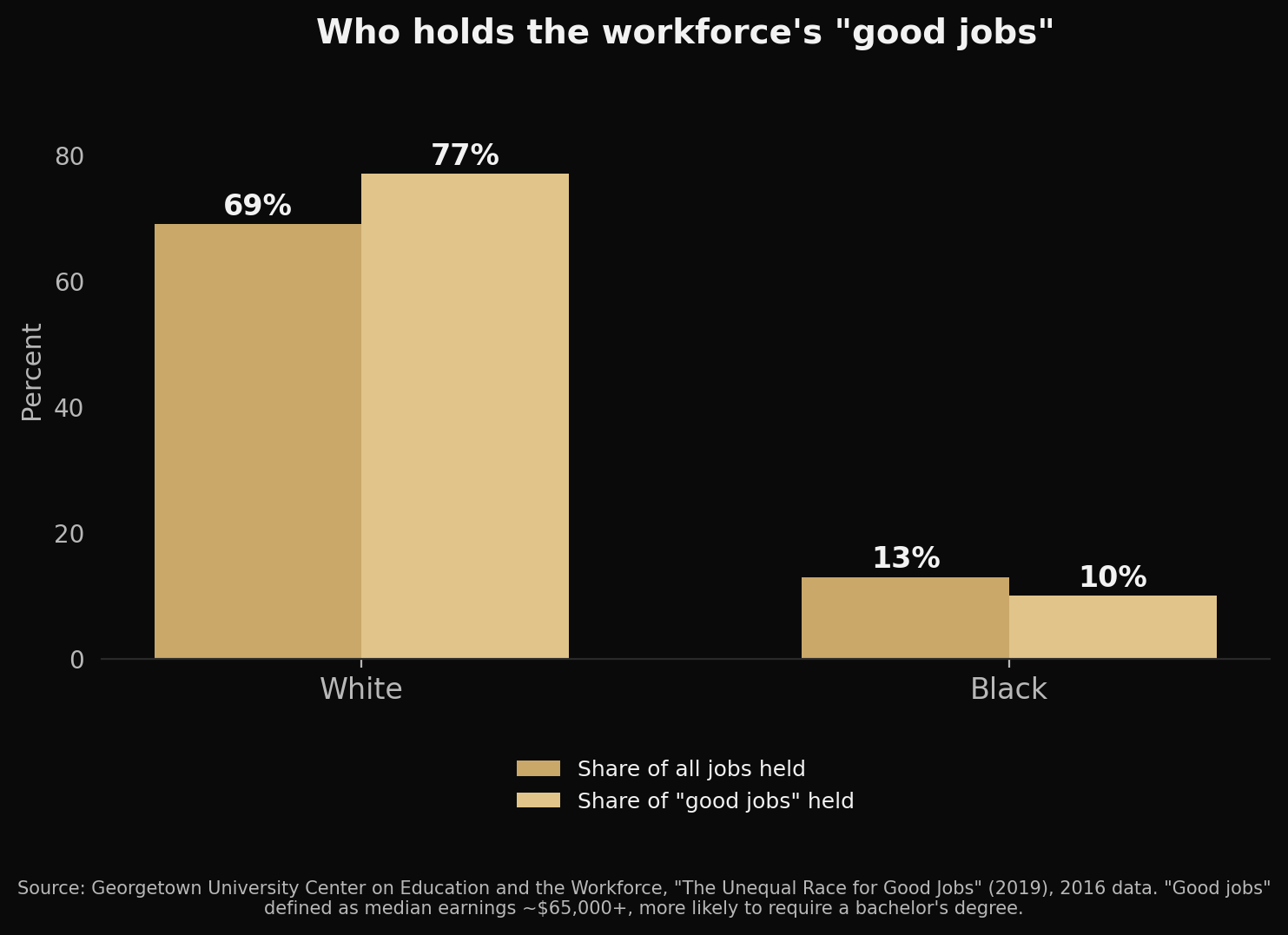
Data show that “reverse racism” is not a thing. What you may be feeling however is poverty or struggling in this society and this economy which is something that people of all races feel.
Life is hard. Are you looking for someone else to blame for your struggles? Why are you wanting to choose Affirmative action for your blame?
“I didn’t own slaves — my ancestors weren’t even here yet”
Why it sounds true: For many white Americans, this is a straightforward fact — their families arrived later, or from elsewhere entirely.
What actually holds up: You are not being blamed for what happened before you. But you CAN be a part of the solution. If you heard “I BLAME YOU” then that’s something for you and your therapist to discuss.
Whiteness is not a biological definition. It isn’t actually real, except that we made it real for power hungry reasons. Whiteness is a social definition that’s been a moving target. Yes we used to consider Irish and Italians lesser than Anglo Saxon whites. Irish immigrants used to be depicted in caricature as ape-like and racially inferior but they found one of their clearest paths into whiteness by joining the very police forces created partly to control them — filling the ranks of NYPD and other urban departments by the 1850s–60s, and using that institutional power to help enforce the same racial hierarchy that had excluded them.
The harm done to Black folks isn’t from the 1800s — the HOLC map, the covenants, urban renewal are 20th century, inside living memory of grandparents. Black people still encounter microaggressions everyday.
If your family bought a home in a “Best”-graded neighborhood in 1955, or moved to a suburb a covenant kept white, they benefited whether or not anyone meant it that way — the same way someone can inherit a house without knowing how it was acquired. It’s not your fault if you inherited wealth. But it is now within your control what you do with it.
Also, we’ve done reparations for people who weren’t Black: $20,000 to each surviving Japanese American internee after WWII, over €80 billion from Germany to Jewish Holocaust survivors, and $3.4 billion to Native Americans over federal mismanagement of trust land. The precedent already exists.
Why do you think we insist reparations are impossible even if we’ve done it before?
“That was all so long ago — why can’t people just get over it?”
Why it sounds true: 1937 or even 1968 feels distant against a single lifetime. It’s ‘illegal to be racist’ now. Case closed. Let’s move on.
What actually holds up: White American has never really made true amends with Black America. The white church has never really made true amends with their role. It will be hard for people to get over it since racism is still impacting their lives and communities.
A family denied a mortgage in 1950 lost decades of home equity that becomes the next generation’s down payment. Homeownership timing is one of the largest drivers of today’s wealth gap. Getting over it doesn’t undo compound interest that happened for one family and not another.
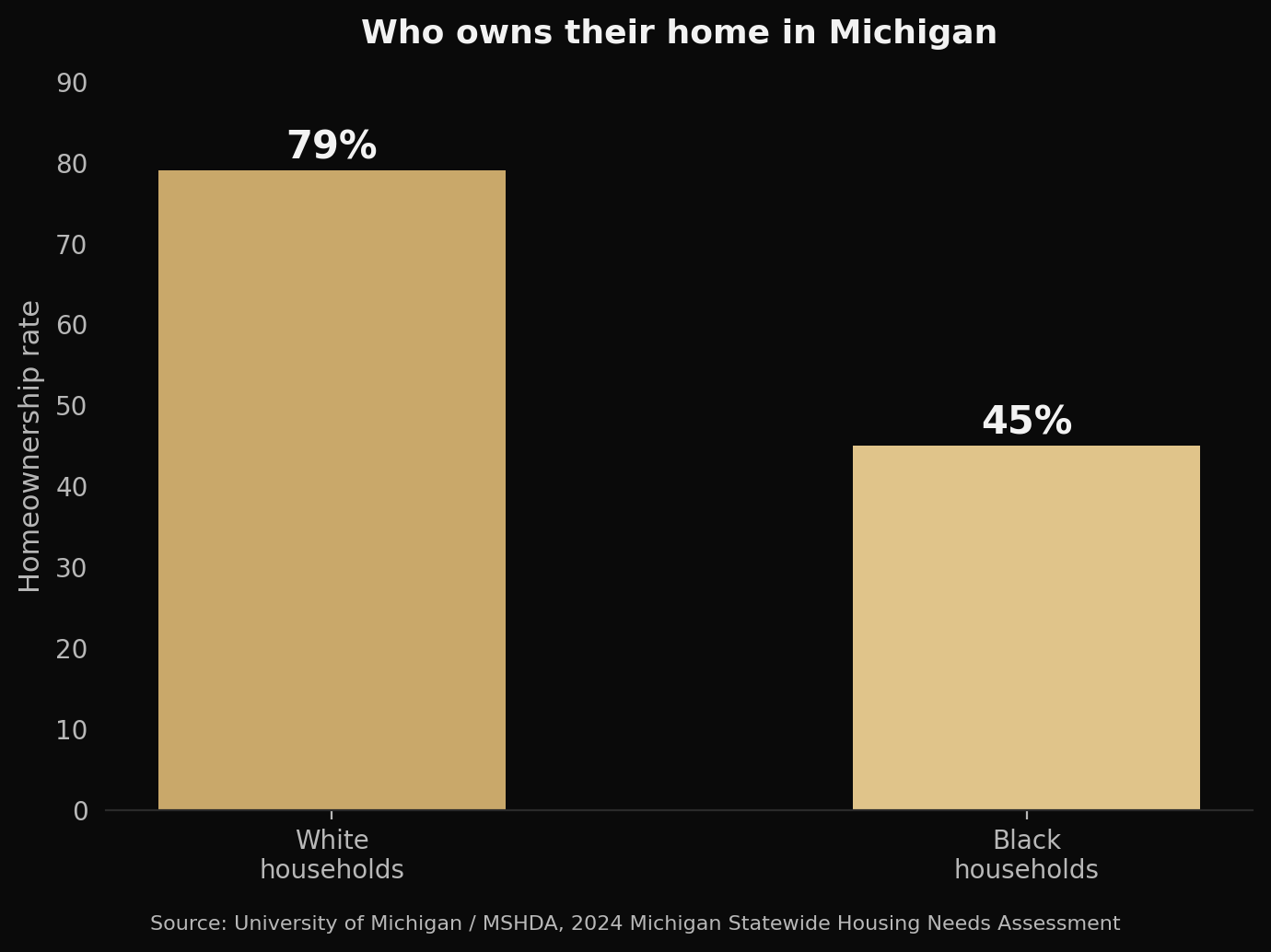
How to read this: Statewide in Michigan — 79% of white households own their home, versus 45% of Black households. A gap that size doesn’t open in a year; it’s what decades compound into.
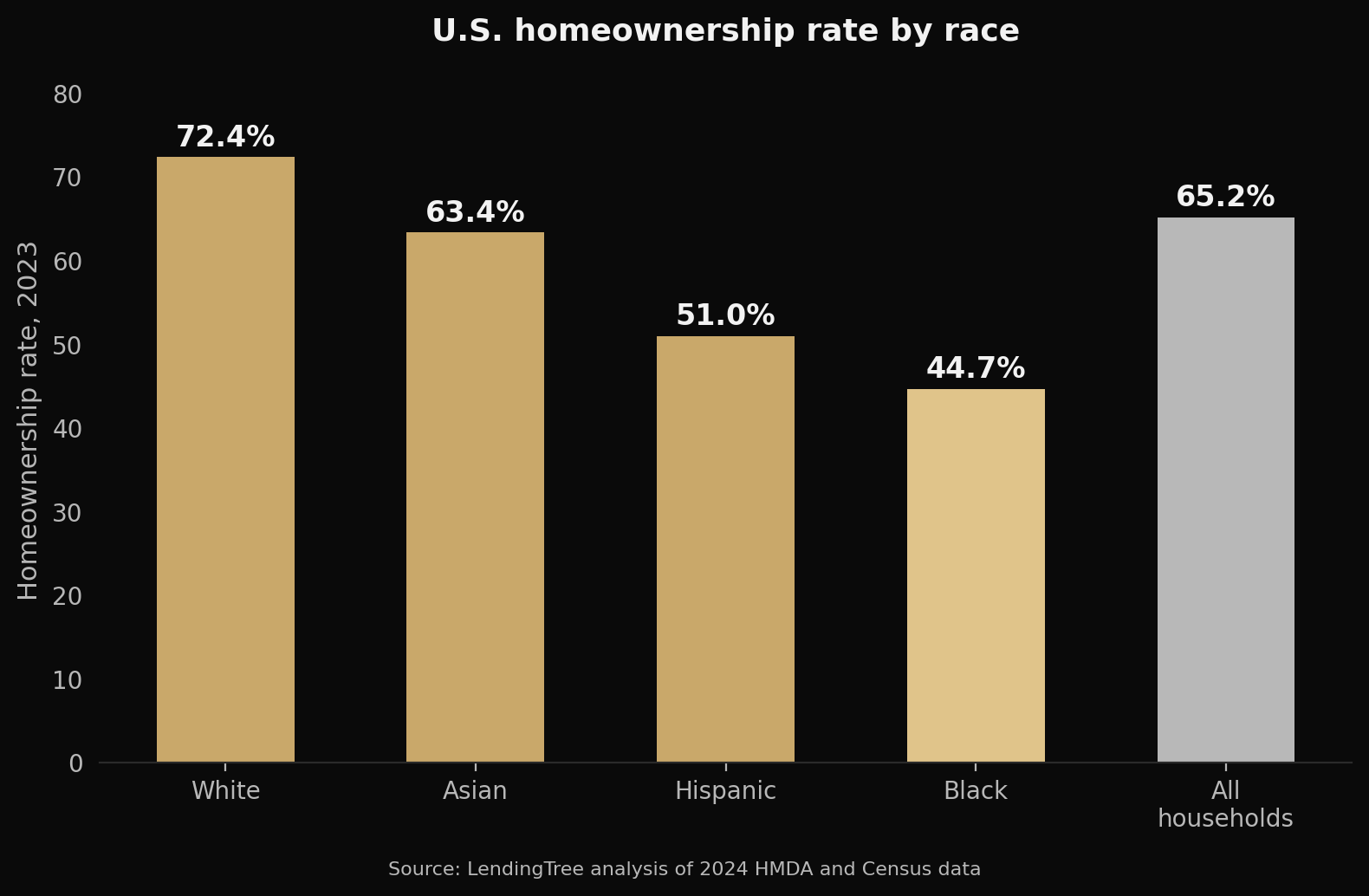
How to read this: White households own homes at 72.4%, above the 65.2% national average; Black households sit furthest below at 44.7%. This chart shows the size of what “getting over it” would have to undo — not a feeling, but eighty years of homes bought or not bought.
Imagine your spouse repeatedly cheated and abused you for years and then one day they insisted they wouldn’t do that anymore (but actually still was). And when you say “I still feel incredibly hurt” they go “Can’t you just get over it?” This is the conversation between white and Black America.
We’re gonna need to pull out the big guns. A “My Bad!” isn’t gonna cut it here.
It’s uncomfortable to talk about racism but not as uncomfortable as living under its weight.

What now?
Well congrats on not leaving the page before the end. No, you don’t have to host a Kwanzaa party at your house now. But you may want to consider what you should do from here.
Black Americans have never fully been treated as Americans due these racially disciminating systems that have never been rectified. Its you and I’s responsibility to spread the word so others who don’t see it can see the fire.
We will never be a the America we think we are until we attempt to make amends for this.
Are you angry with me? Feel free to email me. about it. Depending on how reasonable (or not) you are. I may or may not reply.
If you did not get this, the author of this is very white.
While I may know how to make websites and charts about racism I have never lived it. Please don’t take my word for this but instead read from Black scholars who do the heavy work of educating for real.
I just thought maybe some white people would listen better if it came from a fellow whitey like me.
People you can learn from
Rather than continuing to listen to me, you should learn from and compensate these Black educators and authors.
Dr. Ibram X. Kendi — Historian, Boston University’s Center for Antiracist Research. Author of How to Be an Antiracist and Stamped from the Beginning (National Book Award). Best starting point for the “policy first, attitudes follow” framework this site leans on.
Kimberlé Crenshaw — Legal scholar, Columbia and UCLA. Coined “intersectionality” and helped found Critical Race Theory as a legal framework. Useful for understanding how race, gender, and class compound rather than operate separately.
Heather McGhee — Economist and author of The Sum of Us, cited above. Best for the “this costs everyone, not just people of color” argument.
William A. Darity Jr. — Economist, Duke University. Leading researcher on the racial wealth gap and reparations policy; his work is where most modern wealth-gap statistics ultimately trace back to.
Andre M. Perry — Senior Fellow, Brookings Metro. Author of Know Your Price. His research quantifies exactly what this site’s housing charts show — homes in Black-majority neighborhoods are undervalued by an average of $48,000 compared to comparable homes elsewhere, a $156 billion national gap.
Nikole Hannah-Jones — Journalist, creator of The 1619 Project (Pulitzer Prize). Best for readers who want the connective history from slavery through to today in narrative form.
Khalil Gibran Muhammad — Historian, Harvard Kennedy School. Author of The Condemnation of Blackness, on the history of race, crime statistics, and policing — relevant background for anyone digging into the criminal-justice side of this site’s mission.
Isabel Wilkerson — Journalist, author of The Warmth of Other Suns and Caste. Her Great Migration reporting is essential context for how redlining and Northern segregation are connected to the South.
Dr. Camara Phyllis Jones — Physician and epidemiologist. Creator of the “Gardener’s Tale,” a widely used allegory distinguishing institutional, personally-mediated, and internalized racism — a genuinely useful framework for the “I’m not racist” vs. “the system is” distinction this page makes.
Bryan Stevenson — Founder, Equal Justice Initiative (source of the lynching-history maps referenced elsewhere on this site). Author of Just Mercy.
Mellody Hobson — Finance executive, cited above for “Color Blind or Color Brave?”
Sources & further reading
Everything above draws on real data and real scholarship. Rather than break up the reading with links every few lines, here’s everything gathered by section — videos, data sources, and books, so you can go as deep as you want on any one argument.
“I’m not racist”
- Watch: CNN Business, “Navy Federal Credit Union rejected more than half its Black conventional mortgage applicants” (2023)
- Data: Urban Institute, “The Black Butterfly” (Baltimore investment gap); Urban Institute analysis of 2025 HMDA data (denial rates)
“I don’t see color”
- Watch: Mellody Hobson, “Color Blind or Color Brave?” — TED, 2014 (14 min)
- Prison wage data: LegalClarity, “How Much Do Prisoners Get Paid”
- Incarceration data: Prison Policy Initiative, racial disparities data
- Books & film:
- Data: National Registry of Exonerations, Race and Wrongful Convictions in the United States (2022)
- Summary: Equal Justice Initiative · University of Michigan Law
“If we stop talking about racism, it would be solved”
“My life has been hard — I don’t see how I have any white privilege”
- Watch: Heather McGhee, “Racism Has a Cost for Everyone” — TED, 2020 (17 min). Documents towns that drained public pools rather than integrate them, leaving no one a pool.
- Data: Stanford Open Policing Project, ~100 million traffic stops nationwide (2011–2017)
“White people were slaves too”
“Racism is illegal now, so it’s over”
“Affirmative action / diversity programs are reverse racism”
- Watch: “Affirmative Action” — Crash Course Government #32 (7 min), nonpartisan
- Data: Georgetown Center on Education and the Workforce, “The Unequal Race for Good Jobs”
“I didn’t own slaves — my ancestors weren’t even here yet”
- “What is Redlining?” — PBS (1.5 min)
- HISTORY.com: “How Stereotypes of the Irish Evolved From ‘Criminals’ to Cops”
- “The Irish Had to Ask to Be White”
- Japanese American internment: $20,000 to each of 82,219 surviving internees (~$1.6 billion total) plus a formal presidential apology. Source
- Holocaust survivors: Germany has paid more than €80 billion (~$90 billion) to Jewish victims of Nazism since 1952. Source
- Native American trust mismanagement: $3.4 billion settlement (Cobell v. Salazar), approved by Congress in 2010, payments began 2012. Source
“That was all so long ago — why can’t people just get over it?”
- Watch: Explained: The Racial Wealth Gap — Netflix/Vox, 2018 (16 min)
- Data: University of Michigan / MSHDA, 2024 Michigan Statewide Housing Needs Assessment; LendingTree analysis of 2024 HMDA and Census data
Suggestions for this page? Email me.